Mini PC ou ordinateur portable en 2026 : lequel acheter ?
L'achat d'un ordinateur n'est plus aussi simple que de choisir entre un ordinateur portable bon marché et une tour de bureau imposante.
Les mini-PC actuels sont devenus remarquablement plus petits, plus rapides et bien plus performants, tandis que les ordinateurs portables offrent toujours la praticité inégalée d'une machine tout-en-un. Selon votre utilisation, l'une ou l'autre option peut convenir.
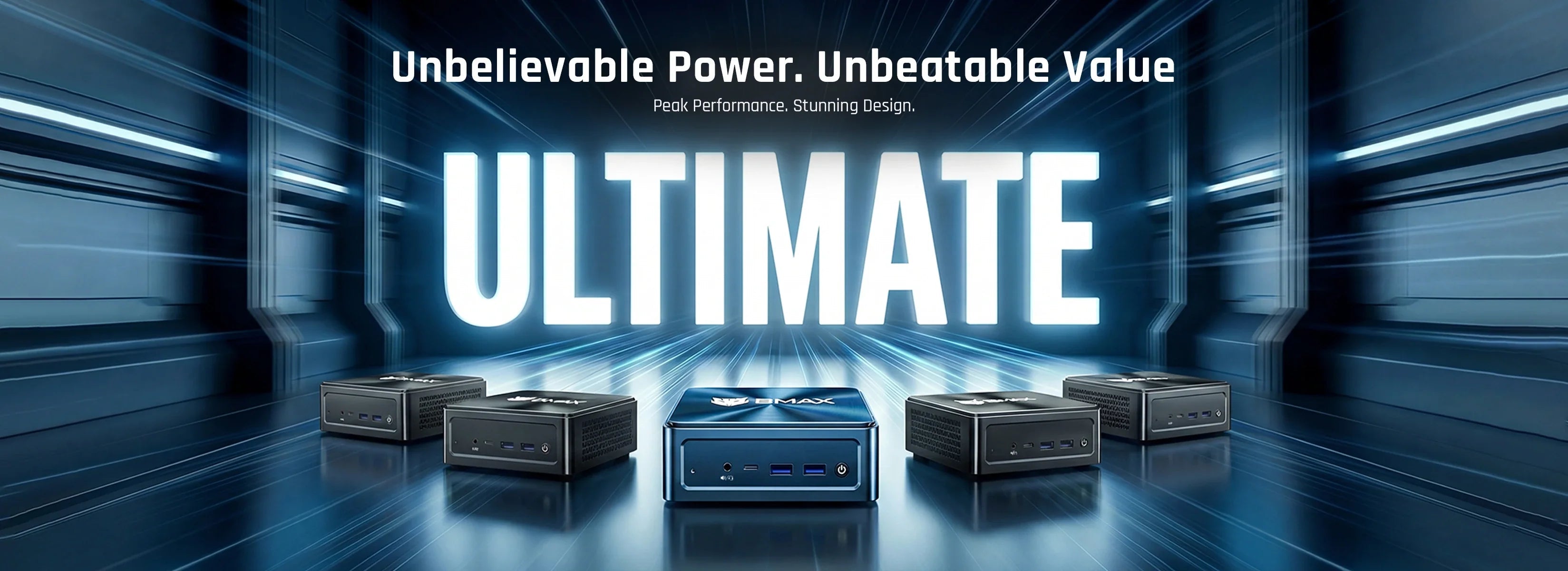
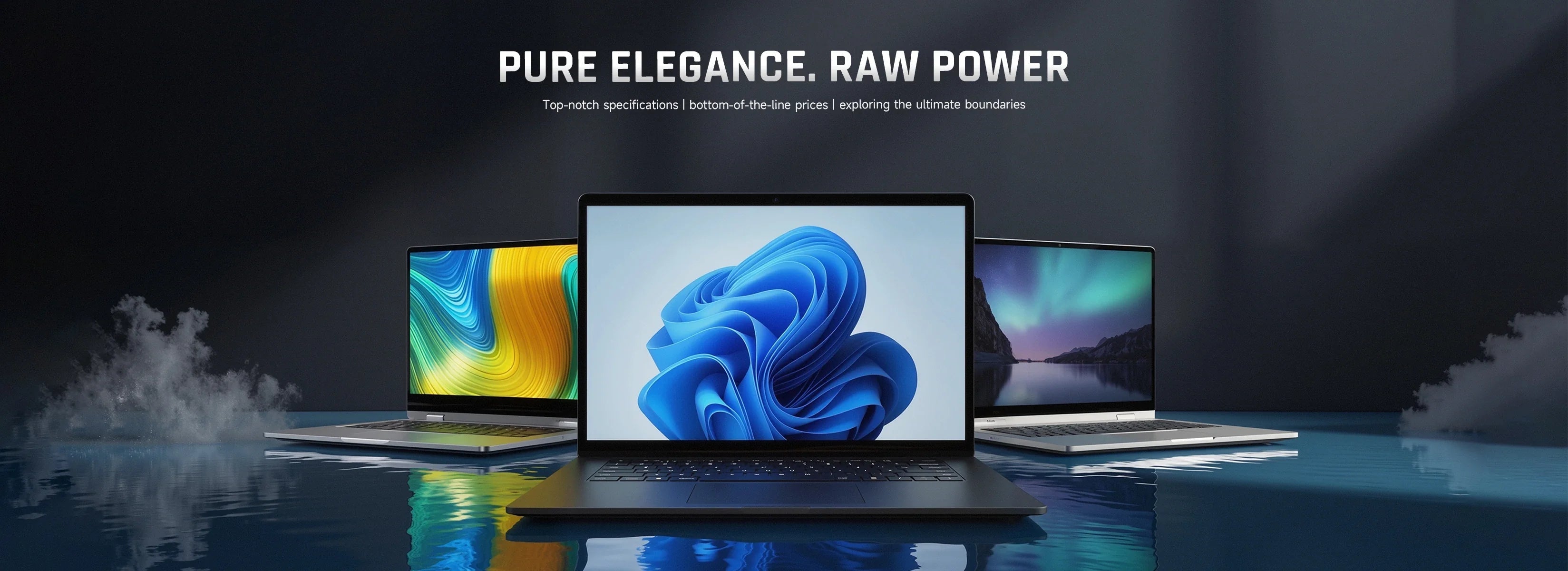
Un mini PC vous offre une configuration de bureau puissante et confortable sans encombrer votre espace de travail. Un ordinateur portable vous offre la liberté de travailler, d'étudier et de naviguer sur Internet où que vous soyez.
Alors, lequel devriez-vous acheter ?
La réponse dépend moins de l'appareil objectivement « meilleur » que de vos habitudes quotidiennes.
Si vous passez 90 % de votre temps à travailler sur le même bureau, un mini PC offre souvent un meilleur rapport qualité-prix, un espace de travail ergonomique plus grand et des possibilités d'évolution plus simples. En revanche, si vous vous déplacez régulièrement entre salles de classe, cafés, bureaux et lieux de voyage, un ordinateur portable est sans conteste le meilleur choix.
Comparons maintenant les mini-PC et les ordinateurs portables là où cela compte le plus : performances, prix, configuration de bureau, mises à niveau et utilisation quotidienne.

Quelle est la principale différence entre eux ?
Les mini-PC et les ordinateurs portables sont tous deux des ordinateurs parfaitement fonctionnels, mais ils sont conçus pour des modes de vie totalement différents.
Un ordinateur portable contient tout dans un seul boîtier :
-
Afficher
-
Clavier
-
Pavé tactile
-
Batterie
-
Intervenants
-
Composants matériels
Un mini PC est essentiellement un ordinateur de bureau compact. Pour l'utiliser, vous branchez vos propres câbles :
-
Moniteur(s)
-
Clavier
-
Souris
-
Haut-parleurs ou casque
La ligne de démarcation ultime, c'est la mobilité. Les ordinateurs portables sont conçus pour vous suivre partout. Les mini-PC, quant à eux, sont conçus pour rester sur un bureau, même si leur petite taille les rend infiniment plus faciles à transporter qu'une tour traditionnelle.
Mini PC contreOrdinateurs portables : Comparaison rapide
| Fonctionnalité | Mini PC | |
| Portabilité | Facile à déplacer, mais nécessite des accessoires | Excellent (Tout-en-un) |
| Installation du bureau | Excellent & Ergonomique | Bien, mais hauteur d'écran limitée. |
| Écran intégré | Non (Utilisez votre propre moniteur) | Oui |
| Alimentation par batterie | Non | Oui |
| Rapport qualité-prix | Souvent plus avantageux | Vous payez un supplément pour l'écran & batterie |
| Options de mise à niveau | Meilleur (échanges de RAM/SSD plus faciles) | Généralement restreint |
| Confort de l'espace de travail | Excellent avec de grands écrans externes | Limité par la taille de l'écran de l'ordinateur portable |
| Prise en charge multi-écrans | Excellent (affichage double/triple) | Varie selon le modèle/les ports |
| Consommation d'énergie | Faible | Faible |
1. Portabilité : L'ordinateur portable l'emporte (sans conteste)
C'est la catégorie la plus facile à juger.
Les ordinateurs portables sont conçus pour vous suivre partout. Glissez-en un dans votre sac à dos et travaillez en classe, à la bibliothèque, dans un café, dans une salle d'attente d'aéroport ou dans la salle de réunion d'un client. Tout ce dont vous avez besoin est à portée de main.
Un mini PC est techniquement portable de par sa taille, mais il l'est pas Conçu pour travailler en déplacement. Impossible d'ouvrir un mini PC dans un train et de se mettre à taper : il vous faut toujours un écran, un clavier, une souris et une prise murale.
Si votre routine quotidienne implique des déplacements constants, achetez un ordinateur portable.
Cependant, si votre ordinateur passe 95 % de son temps sur le même bureau, payer plus cher pour un écran et une batterie intégrés n'est peut-être pas le meilleur investissement.

2. Configuration du bureau : Le mini PC l’emporte
Si vous travaillez ou étudiez à un endroit fixe, un mini PC vous permet de créer un espace de travail beaucoup plus performant et ergonomique.
Au lieu de vous pencher sur un écran d'ordinateur portable de 14 pouces, vous pouvez choisir votre propre équipement :
-
Un grand écran haute résolution (ou deux écrans)
-
Un clavier mécanique ou ergonomique de taille standard
-
Une souris confortable
-
Des haut-parleurs dédiés et une webcam
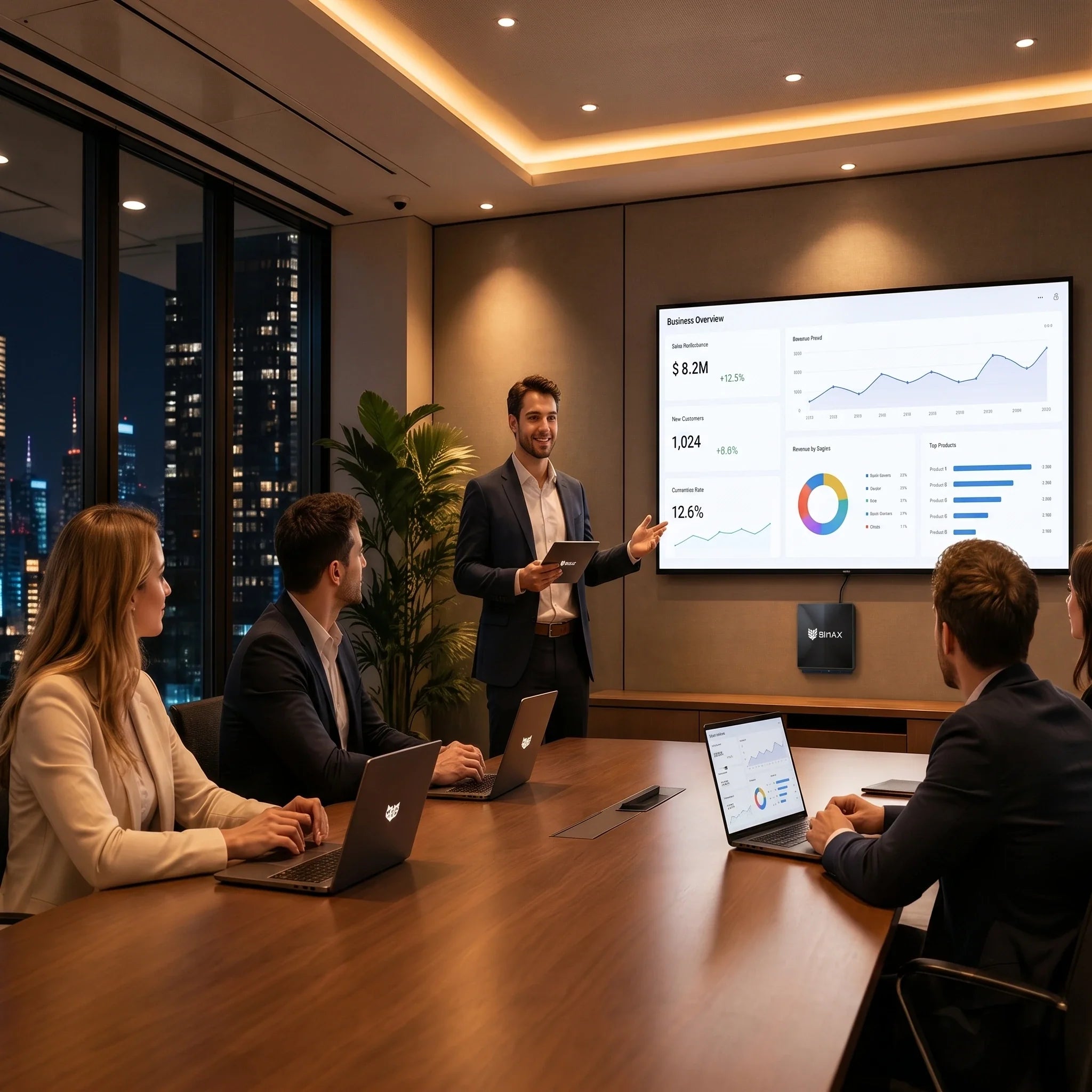
Mieux encore, de nombreux mini-PC peuvent être fixés directement à l'arrière d'un écran grâce à un support VESA. L'ordinateur disparaît ainsi complètement, laissant votre bureau parfaitement dégagé.

(Pour découvrir comment les PC compacts se comparent aux tours classiques, consultez notre guide sur Mini PC ou ordinateur de bureau : lequel acheter en 2026 ?).
3. Performance & Valeur : En avoir plus pour son argent
On croit souvent à tort que les ordinateurs portables sont automatiquement plus puissants que les mini-PC. C'est tout simplement faux.
Les deux formats utilisent la même génération de processeurs, de la RAM rapide et des SSD NVMe. Cependant, les mini-PC offrent souvent… meilleur rapport qualité-prix pour le matériel parce que vous ne payez pas de supplément pour un écran intégré haut de gamme, des cellules de batterie et une conception de châssis d'ordinateur portable spécialisée.
Si vous possédez déjà un moniteur et des périphériques, un mini PC vous permet de consacrer 100 % de votre budget à la performance informatique brute.
(Pour mieux comprendre les spécifications, consultez notre Guide d'achat des mini-PC 2026).
4. Prix et frais d'installation
-
Si vous possédez déjà un écran et un clavier : L'achat d'un mini PC est une solution exceptionnellement économique pour obtenir une station de travail performante.
-
Si vous partez de zéro absolu : N'oubliez pas de prendre en compte le coût d'un écran, d'un clavier et d'une souris. Si vous avez besoin d'un appareil tout-en-un prêt à l'emploi, un ordinateur portable est plus simple.
Vous cherchez des options abordables ? Consultez notre guide sur Les meilleurs mini-PC à moins de 300 $ en 2026).
5. Améliorations et extension
C'est un problème majeur pour les ordinateurs portables modernes, dont beaucoup ont la RAM et le stockage soudés directement sur la carte mère.
En revanche, de nombreux mini-PC offrent des possibilités de mise à niveau simples. Selon le modèle, vous pouvez facilement ouvrir le boîtier pour mettre à niveau votre système. BÉLIER ou le remplacer par un plus grand SSD NVMe au fil du temps, à mesure que vos projets se développent.
Si vous prévoyez de conserver votre machine pendant 4 à 5 ans, la possibilité de mise à niveau est un argument de poids en faveur des mini-PC.
6. Travailler à domicile : pourquoi un mini PC est un atout.
Pour les télétravailleurs qui passent toute la journée à la maison, se pencher sur un clavier d'ordinateur portable peut engendrer des douleurs au cou et aux épaules.
Un mini PC s'intègre parfaitement à un espace de travail à domicile complet : deux grands écrans, une chaise de bureau confortable, un clavier adapté et une connexion Ethernet ultra-fiable. Il gère sans effort les appels vidéo, les tableurs, le multitâche intensif et les outils de gestion de projet, tout en occupant un minimum d'espace sur le bureau.
(Pour en savoir plus, consultez notre guide : Les meilleurs mini-PC pour le télétravail en 2026).
7. Étudiants : Lequel choisir ?
-
Choisissez un ordinateur portable si : Vous passez quotidiennement votre temps entre les amphithéâtres, les bibliothèques universitaires, les groupes d'étude et les cafés.
-
Choisissez un mini PC si : Vous étudiez principalement depuis votre chambre d'étudiant ou votre bureau de chambre, vous souhaitez un écran beaucoup plus grand pour vos recherches et la rédaction de vos dissertations, et vous recherchez de meilleures performances pour votre budget.
(Explorez les options étudiantes dans Les meilleurs mini-PC pour étudiants en 2026).
8. Programmation et développement
Les développeurs ont besoin d'un processeur puissant, d'une quantité importante de RAM et d'un stockage rapide.
Si votre poste de programmation principal se trouve à la maison ou au bureau, un mini PC associé à deux écrans crée un environnement de développement incroyable et sans distraction, capable de gérer VS Code, les conteneurs Docker, les bases de données locales et les IDE lourds sans le moindre effort.
(Lisez notre analyse approfondie : Les meilleurs mini-PC pour programmeurs et développeurs en 2026).
9. Jeux
Les performances de jeu sont déterminées par le matériel interne, et non par le format de l'appareil.
Bien que des ordinateurs portables de jeu haut de gamme existent, ils sont souvent encombrants, bruyants et coûteux. Les mini-PC offrent un excellent compromis pour l'e-sport, les jeux indépendants et le cloud gaming sur grand écran. (Pour les jeux AAA 4K les plus exigeants, aucun de ces formats ne peut rivaliser avec une tour de bureau personnalisée).
(En savoir plus dans Les mini-PC sont-ils adaptés au jeu en 2026 ?).
10. Informatique IA et gestion thermique
Avec la généralisation des charges de travail d'IA, les puces modernes intègrent désormais des NPU (unités de traitement neuronal) pour accélérer les outils d'IA locaux.
Le BMAX B11 Pro (équipée du processeur
Cependant, concentrer des performances élevées dans un espace réduit génère de la chaleur. Les ordinateurs portables et les mini-PC souffrent de surchauffe si leur système de refroidissement est mal conçu. BMAX résout ce problème avec le Système de refroidissement de la capsule spatiale, Optimisation du flux d'air interne pour maintenir des performances stables, des températures basses et un faible niveau sonore du ventilateur lors de charges de travail prolongées.
(Pour en savoir plus sur le matériel d'IA, consultez Les meilleurs mini-PC IA de 2026 : ce qu’il faut savoir avant d’acheter un PC IA).

Résumé : Qui devrait acheter quoi ?
🟢 Achetez un mini PC si vous :
-
Travailler ou étudier principalement depuis un lieu fixe (bureau à domicile, résidence étudiante, bureau)
-
Je possède déjà (ou prévois d'acheter) un bon écran et un clavier.
-
Vous voulez un meilleur matériel pour votre argent ?
-
J'apprécie un espace de travail propre et minimaliste.
-
Vous souhaitez pouvoir facilement mettre à niveau la RAM ou le stockage ultérieurement ?
🔵 Achetez un ordinateur portable si vous :
-
Déplacements fréquents ou travail à partir de plusieurs endroits par jour
-
Je recherche un appareil tout-en-un avec écran et batterie intégrés.
-
Travaillez en déplacement (trains, avions, cafés)
-
Je ne souhaite pas acheter de périphériques externes.
Foire aux questions
Un mini PC est-il meilleur qu'un ordinateur portable ?
Tout dépend de votre style de vie. Les mini-PC offrent un meilleur rapport qualité-prix et une configuration ergonomique pour les postes de travail fixes, tandis que les ordinateurs portables l'emportent sur la mobilité et la praticité d'un appareil tout-en-un.
Un mini PC peut-il remplacer un ordinateur portable ?
Si vous travaillez à domicile ou dans un bureau fixe, oui. Mais il ne peut pas remplacer un ordinateur portable si vous devez travailler en déplacement.
Les mini-PC sont-ils moins chers que les ordinateurs portables ?
Si vous possédez déjà un écran et des périphériques, oui : les mini-PC offrent souvent de meilleures performances à moindre coût. Si vous devez tout acheter, tenez compte du prix de l’écran.
Lequel est le meilleur pour travailler à domicile ?
Un mini PC est généralement préférable pour le télétravail car il permet de se connecter à de grands écrans ergonomiques et à des claviers de taille standard.