Sind Mini-PCs im Jahr 2026 noch zum Spielen geeignet? Was man tatsächlich spielen kann

Jahrelang bedeutete PC-Gaming nur eines: einen massiven Desktop-Tower, eine teure, klobige Grafikkarte, mehrere laute Lüfter und ein Setup, das viel zu viel Platz auf dem Schreibtisch beanspruchte.
Die Zeiten haben sich geändert.
Moderne Prozessoren verfügen über überraschend leistungsstarke integrierte Grafikeinheiten, der Arbeitsspeicher ist schneller denn je, und NVMe-SSDs haben Ladezeiten praktisch überflüssig gemacht. Kompakte Computer bewältigen heute Aufgaben, für die früher deutlich größere Systeme nötig waren.
Das führt natürlich zu einer wichtigen Frage für das Jahr 2026: Kann man einen Mini-PC tatsächlich zum Spielen verwenden?
Die ehrliche Antwort? Das hängt ganz davon ab, was du spielen möchtest.
Ein Mini-PC ist ideal für Gelegenheitsspiele, Indie-Hits, E-Sport-Titel, ältere AAA-Spiele und Cloud-Gaming. Wer jedoch maximale Grafikeinstellungen, aufwendiges Raytracing oder die neuesten 4K-Blockbuster spielen möchte, sollte weiterhin einen klassischen Gaming-Tower mit einer dedizierten High-End-Grafikkarte in Betracht ziehen.
Lassen Sie uns aufschlüsseln, was Sie realistischerweise von einem Gaming-Mini-PC erwarten können und wie Sie den richtigen auswählen.
Kann ein Mini-PC wirklich Spiele ausführen?
Ja – aber die Spieleleistung variiert stark je nach Hardware.
Ein Mini-PC ist ein voll funktionsfähiger Computer. Er verfügt über eine CPU, eine Grafikkarte, Arbeitsspeicher, Speicherplatz und ein Kühlsystem. Der einzige wirkliche Unterschied besteht darin, dass alles in einem winzigen Gehäuse untergebracht ist.
Moderne Mini-PCs können Folgendes problemlos bewältigen:
-
Wettbewerbsfähige E-Sport-Spiele
-
Indie- und 2D/3D-Puzzlespiele
-
Strategie- und Simulationstitel
-
Ältere AAA-Blockbuster
-
Gemütliches Couch-Gaming
-
Cloud-Gaming und Spiele-Streaming
Die
(Möchten Sie eine detaillierte Aufschlüsselung der Funktionsweise dieser Spezifikationen? Schauen Sie sich unsere Kaufberatung für Mini-PCs 2026).
Welche Spiele kann ein Mini-PC ausführen?

1. E-Sport und Wettkampfspiele (Gewinner: Ja)
Wenn du hauptsächlich kompetitive Multiplayer-Spiele spielst, ist ein Mini-PC eine überraschend praktische Option. Titel wie League of Legends, Dota 2, Valorant, Rocket League, Minecraft, Und Fortnite sind im Allgemeinen für den reibungslosen Betrieb auf modernen Prozessoren mit integrierter Grafik optimiert.
Man braucht nicht unbedingt eine High-End-Grafikkarte, um in kompetitiven Spielen aufzusteigen. Ein ausgewogener Prozessor, schneller Arbeitsspeicher und eine gute Kühlung sorgen für ein flüssiges Spielerlebnis mit hohen Bildraten.
2. Indie- und Gelegenheitsspiele (Gewinner: Absolut)
Mini-PCs sind ein Paradies für Indie-Spielefans. Jump'n'Runs, Strategiespiele, Simulationen und Puzzlespiele haben in der Regel moderate Hardwareanforderungen und laufen problemlos auf nahezu jedem modernen Kompakt-PC.
Wenn Sie einen Rechner suchen, der tagsüber Ihre Arbeit erledigt und abends Indie-Perlen zum Besten gibt, ist ein Mini-PC genau das Richtige.
3.Ältere AAA-Spiele (Gewinner: Ja, mit angepassten Einstellungen)
Kann man ältere Blockbuster spielen? Ja. Allerdings müssen Sie möglicherweise einige Einstellungen anpassen – beispielsweise die Auflösung von 4K auf 1080p reduzieren oder die Schattenqualität und das Anti-Aliasing verringern.
Moderne integrierte Grafikkarten haben sich stark weiterentwickelt, wodurch kompakte Systeme heute wesentlich leistungsfähiger sind als früher.
4. Die neuesten AAA-Blockbuster (Gewinner: Vorsicht ist geboten)
Hier ist es wichtig, realistische Erwartungen zu haben. Brandneue AAA-Spiele benötigen massiven dedizierten Videospeicher (VRAM), aufwändiges Grafikrendering und aggressive Kühlung.
Die meisten Mini-PCs setzen auf integrierte Grafik anstelle von leistungsstarken Desktop-GPUs. Der Versuch, die neuesten AAA-Spiele mit maximalen Einstellungen und Raytracing auf einem so kompakten Gerät auszuführen, wird schwierig.
Die Umgehungslösung? Mit Cloud-Gaming-Diensten (wie Xbox Cloud Gaming und GeForce NOW) können Sie anspruchsvolle Spiele mühelos streamen, ohne dass eine leistungsstarke lokale GPU erforderlich ist.
Integrierte Grafikkarten haben sich weiterentwickelt
Der Hauptgrund, warum Mini-PCs plötzlich auch zum Spielen geeignet sind, liegt im enormen Fortschritt bei integrierter Grafik. Moderne Intel- und AMD-Prozessoren vereinen CPU-Kerne, Grafikprozessoren und Speichercontroller in einer einzigen, effizienten Plattform.
Für Gelegenheitsspiele und alltägliche Produktivitätsanwendungen bedeutet dies, dass Sie eine überraschend leistungsfähige Grafik erhalten, ohne eine separate, energiehungrige Grafikkarte zu benötigen.
Wie viel RAM benötigt ein Gaming-Mini-PC?
Da die meisten Mini-PCs integrierte Grafikkarten verwenden, RAM ist Ihre Lebensader. Im Gegensatz zu einer dedizierten Grafikkarte mit eigenem VRAM greifen integrierte Grafikkarten auf den Systemspeicher zurück.
-
16 GB RAM: Ein solider Ausgangspunkt für Gelegenheitsspiele und leichtere Titel.
-
32 GB RAM: Absolut empfehlenswert, wenn Sie gerne Multitasking betreiben, Hintergrund-Apps während des Spielens ausführen oder anspruchsvollere moderne Titel spielen.
(Für einen detaillierteren Einblick in die Speicheranforderungen verschiedener Arbeitslasten lesen Sie bitte unseren Leitfaden zu Mini-PCs für Programmierer und Entwickler).
Warum Kühlung bei Gaming-Mini-PCs wichtig ist

Gaming beansprucht CPU und GPU dauerhaft und stark. Lange Gaming-Sessions erzeugen erhebliche Hitze. Kann ein kompaktes Gehäuse diese Wärme nicht schnell genug abführen, wird das System... thermische Drosselung—verlangsamt sich selbst, um eine Überhitzung zu vermeiden.
Deshalb ist das Wärmemanagement für einen Gaming-Mini-PC von entscheidender Bedeutung.
BMAX entwickelte die Kühlsystem der Raumkapsel Speziell entwickelt zur Optimierung der internen Luftzirkulation und Wärmeableitung in beengten Räumen. Effektive Kühlung gewährleistet stabile Bildwiederholraten, niedrigere Betriebstemperaturen und eine längere Lebensdauer Ihrer Hardware.
(Mehr über thermisches Design erfahren Sie in unserem Leitfaden zu Hochleistungsfähige Mini-PCs im Jahr 2026).
Kann ein KI-Mini-PC zum Spielen verwendet werden?
KI-PCs werden 2026 der absolute Renner sein und oft über dedizierte Komponenten verfügen. NPUs (Neuronale Verarbeitungseinheiten) für lokale KI-Aufgaben.
NPUs sind zwar hervorragend geeignet für KI-gestützte Produktivität, intelligente Software und Zukunftssicherheit, Eine NPU ersetzt keine Gaming-GPU. Beim Gaming sind nach wie vor die reine Prozessor- und Grafikleistung das A und O.
Moderne Prozessoren, die eine starke CPU-
(Neugierig auf KI-Chips? Lesen Sie unseren Leitfaden dazu.) Die besten KI-Mini-PCs des Jahres 2026).
Mini-PC vs. Gaming-Desktop: Ein kurzer Vergleich
| Besonderheit | Mini-PC | Traditioneller Gaming-Desktop |
| Schreibtischplatz | Minimaler Platzbedarf | Nimmt viel Platz ein |
| Stromverbrauch | Niedrig | Hoch |
| E-Sport & Gelegenheitsspiele | Exzellent | Exzellent |
| Neueste AAA-Spiele | Eingeschränkt (modellabhängig) | Hervorragend (dedizierte GPU) |
| Hardware-Upgrades | Begrenzt (RAM/SSD) | Umfangreich (GPUs und CPUs austauschen) |
| Portabilität | Sehr leicht zu bewegen | Schwer und unhandlich |
-
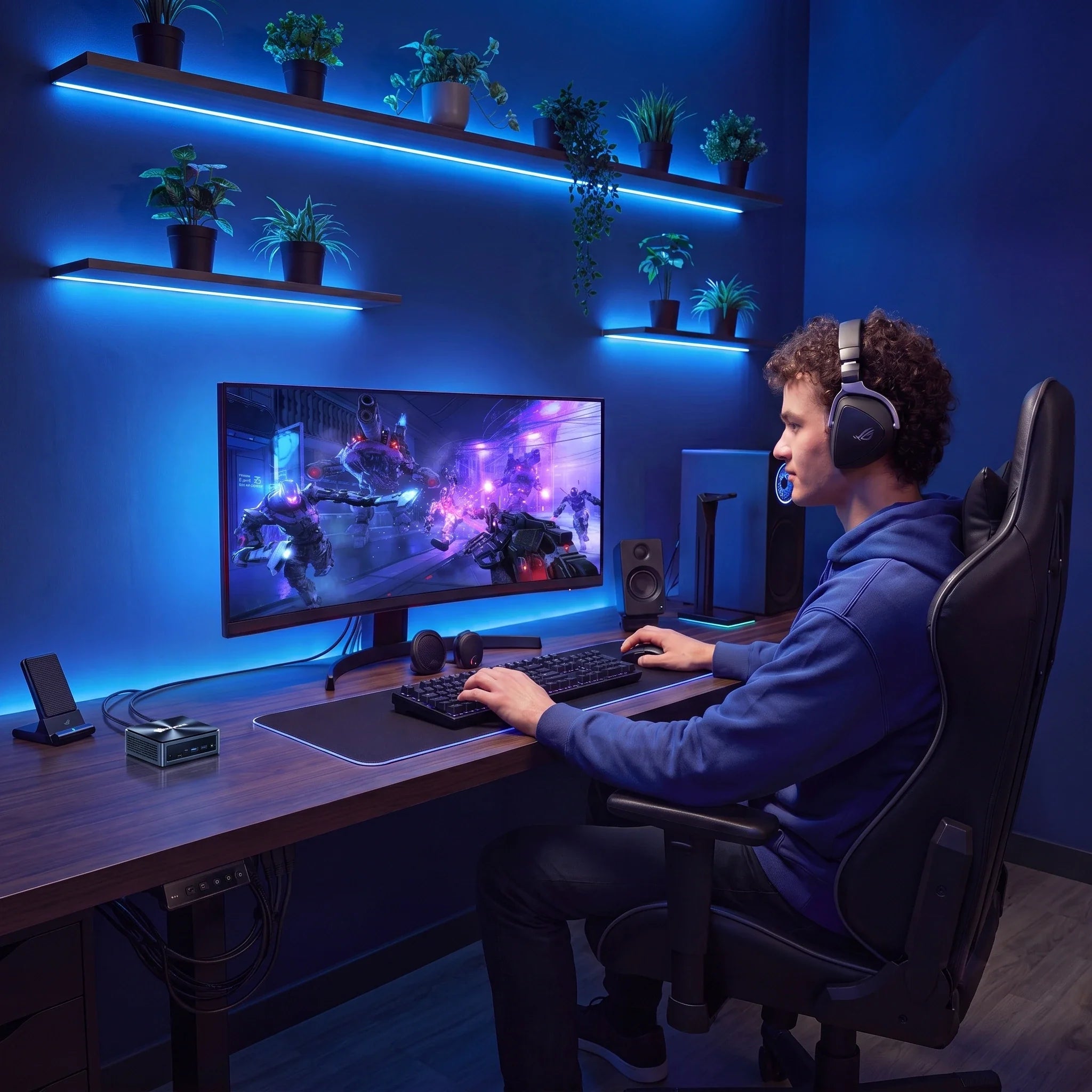
Wählen Sie einen Mini-PC, wenn: Sie haben nur begrenzt Platz auf Ihrem Schreibtisch, spielen E-Sport- oder Indie-Titel, möchten einen Rechner sowohl für Arbeit als auch zum Spielen und bevorzugen ein sauberes, leises Setup.
-
Wählen Sie einen Gaming-Desktop, wenn: Sie müssen die neuesten AAA-Spiele in 4K-Ultra-Einstellungen spielen können, benötigen eine dedizierte Grafikkarte und lieben es, Ihre Hardware jedes Jahr aufzurüsten.
(Für einen umfassenderen Vergleich lesen Sie unsere vollständige Aufschlüsselung:) Mini-PC vs. Desktop-PC: Welchen sollten Sie im Jahr 2026 tatsächlich kaufen?).
Häufig gestellte Fragen
Kann ein Mini-PC moderne Spiele ausführen?
Ja, aber es hängt stark vom jeweiligen Spiel ab. E-Sport-Titel, Indie-Spiele und ältere Spiele laufen flüssig. Anspruchsvolle, brandneue AAA-Spiele erfordern hingegen reduzierte Grafikeinstellungen oder Cloud-Gaming-Dienste.
Eignen sich Mini-PCs für E-Sport-Spiele?
Auf jeden Fall. Spiele wie Valorant, League of Legends, Und Rocket League Sie haben geringere Hardwareanforderungen und laufen hervorragend auf modernen Mini-PCs.
Wie viel RAM benötige ich für einen Gaming-Mini-PC?
16 GB sind ein guter Ausgangspunkt, 32 GB werden jedoch empfohlen, wenn Sie gerne Multitasking betreiben oder anspruchsvollere Spiele spielen, während im Hintergrund Apps laufen.
Kann ein Mini-PC einen Gaming-Desktop ersetzen?
Für Gelegenheitsspieler, E-Sport-Fans und Cloud-Gamer – ja. Für Hardcore-Gamer, die High-End-Grafikkarten und 4K-Ultra-Einstellungen benötigen, ist ein herkömmlicher Desktop-PC weiterhin unerlässlich.
Abschluss
Sind Mini-PCs im Jahr 2026 noch zum Spielen geeignet? Ja – mit realistischen Erwartungen.
Moderne Mini-PCs sind erstaunlich leistungsfähig und bewältigen E-Sport, Indie-Hits, Gelegenheitsspiele, ältere AAA-Titel und Cloud-Gaming mühelos. Gleichzeitig bieten sie unschlagbar viel Platz auf dem Schreibtisch, niedrigere Stromkosten und einen aufgeräumten Arbeitsplatz.
Für ambitionierte Gamer, die maximale 4K-Bildwiederholraten anstreben, ist ein herkömmlicher Tower-PC die richtige Wahl. Wer hingegen einen schlanken, vielseitigen Computer sucht, der Arbeit, Studium und gelegentliches Spielen in einem kompakten Gehäuse vereint, für den ist ein moderner Mini-PC eine hervorragende Option.