When you’ve decided to downsize from a massive, humming desktop tower, a whole new world of compact computing opens up. But as you start shopping around for space-saving desktop alternatives, you’ll quickly run into a maze of industry jargon: Mini PCs, NUCs, and SFF (Small Form Factor) PCs.
While all of them save significant desk space compared to old-school full-size towers, they are engineered for very different types of users. Are they the same thing? Not quite.
If you're trying to figure out whether you should buy a plug-and-play prebuilt mini pc, hunt down an intel nuc alternative, or build a custom small form factor pc, this detailed comparison breaks down the differences so you can pick the right compact machine for your workflow.

Defining the Contenders: What Are Your Options?
To understand which micro form factor fits your daily life, let's look at what each term actually means in 2026:
-
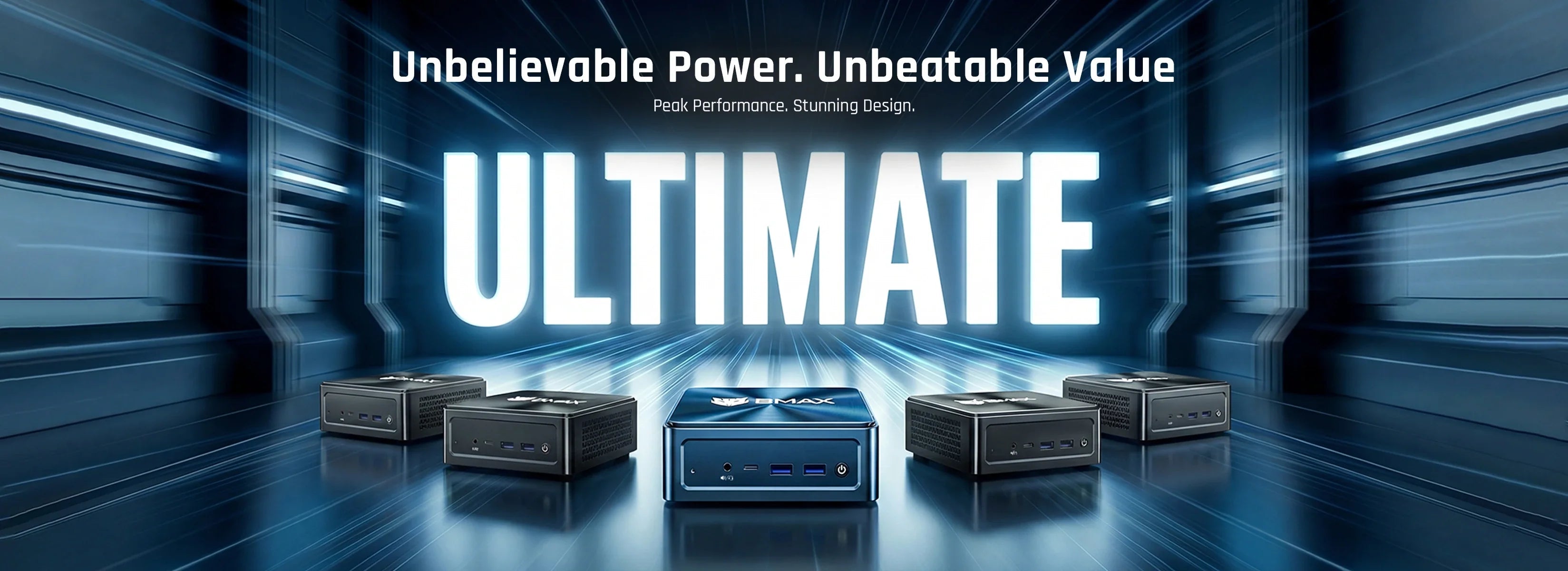
Standard Mini PC: A fully assembled, highly integrated, ultra-compact computer (often the size of a paperback book). They run on efficient mobile-class processors, feature integrated graphics, and come straight out of the box with Windows, RAM, and an NVMe SSD pre-installed.
-
NUC (Next Unit of Computing): Originally pioneered by Intel (and now managed by key partners like ASUS), NUCs represent a specific lineage of ultra-small barebones or pre-built kits. They span everything from basic corporate office boxes to high-end enthusiast gaming cubes.
-
SFF PC (Small Form Factor / ITX Build): These are custom-built desktop PCs housed in scaled-down chassis (typically between 10 to 20 liters in volume). Unlike standard mini PCs, true SFF builds can accommodate full-sized desktop components, including massive dual-slot graphics cards and desktop-class processors.
1. Size and Desk Footprint
-
Mini PC (Winner for Space-Saving): The absolute king of minimalism. They take up virtually zero desk space, can easily slide into a laptop bag, and can mount invisibly behind a monitor using a VESA bracket.
-
SFF PC: While significantly smaller than a traditional mid-tower, an SFF build is still much heavier, wider, and bulkier than a mini pc. It requires a dedicated spot on your desk and isn't something you casually toss into a travel backpack.
(If you want to see how compact systems stack up against old-school towers, read our guide on Mini PC vs Desktop: Which One Should You Buy in 2026?).

2. Performance and Graphics Power
-
Mini PC: Modern high-performance mini PCs easily handle office productivity, 4K video streaming, programming, and light casual gaming using advanced integrated graphics. However, they lack the internal physical space for massive dedicated desktop GPUs.
-
SFF PC: This is where custom SFF builds shine. Because they have room for a discrete graphics card (such as an NVIDIA RTX series card), an SFF PC can deliver extreme 4K gaming, heavy 3D rendering, and professional local AI model training.
3. Customizability, Thermals, and Noise
-
Mini PC: Upgrading is usually limited to swapping out the NVMe SSD or expanding the SO-DIMM RAM. You cannot upgrade the CPU or add a discrete graphics card. On the flip side, they are engineered for exceptional power efficiency and run relatively quiet under normal office workloads.
-
SFF PC: Because you build them yourself, you have near-total control over parts. However, cramming desktop-grade power into a 15-liter box creates serious thermal challenges. SFF PCs require careful cable management, specialized liquid or low-profile air coolers, and can get quite loud under heavy gaming or rendering loads.
4. Price and Ease of Use
-
Mini PC: Offers plug-and-play simplicity. You buy it, plug it into a monitor, and you're ready to work within 5 minutes. They also deliver exceptional price-to-performance value for everyday and professional workloads.
-
SFF PC: Often much more expensive. Specialty ITX motherboards, compact SFX power supplies, and specialized small-form-factor GPUs carry a heavy component "tax," making custom SFF builds much pricier than standard mid-towers or prebuilt mini PCs.
Which One Should You Choose?
-
Choose a Mini PC if: You want a clean, quiet, energy-efficient computer for everyday work, studying, programming, media streaming, or casual gaming. You want something that works right out of the box without the hassle of building, component hunting, or thermal troubleshooting.
-
Choose an SFF PC if: You are a hardcore gamer or professional 3D creator who demands a discrete desktop graphics card, but you still want a hardware setup smaller than a giant traditional tower.
(For a comprehensive look at choosing a ready-to-go compact computer, explore our 2026 Mini PC Buying Guide).

Conclusion
The compact computing market has something for everyone. While custom SFF builds appeal to hardware enthusiasts who want desktop-class graphics in a smaller box, Mini PCs remain the undisputed champions for 90% of everyday users, remote workers, students, and professionals who prioritize plug-and-play simplicity, quiet operation, and zero desk clutter.
Ready for a seamless, space-saving computing experience? Explore the BMAX Mini PC collection to find reliable, high-performance compact computers built for modern workflows.
Frequently Asked Questions (FAQ)
Q: Is a Mini PC the same thing as an Intel NUC?
A: An Intel NUC is a specific type of Mini PC. "Mini PC" is a broad market category that includes all ultra-compact computers, while NUC was a specific brand line originally created by Intel (and now managed by partners like ASUS).
Q: Can I put a gaming graphics card inside a standard Mini PC?
A: Generally, no. Standard Mini PCs rely on integrated graphics. If you want a dedicated desktop gaming graphics card in a small setup, you need a custom SFF (Small Form Factor) PC or an external GPU (eGPU) enclosure.
Q: Which is easier to set up: a Mini PC or an SFF PC?
A: A Mini PC is vastly easier. It comes fully assembled with Windows pre-installed. An SFF PC usually requires you to source individual parts, assemble them carefully in a cramped case, and install the operating system yourself.
Q: Are Mini PCs more energy-efficient than SFF PCs?
A: Yes. Because Mini PCs use mobile-class processors and integrated graphics, they consume significantly less power (often drawing 15W to 65W under load) compared to SFF PCs running dedicated desktop GPUs.