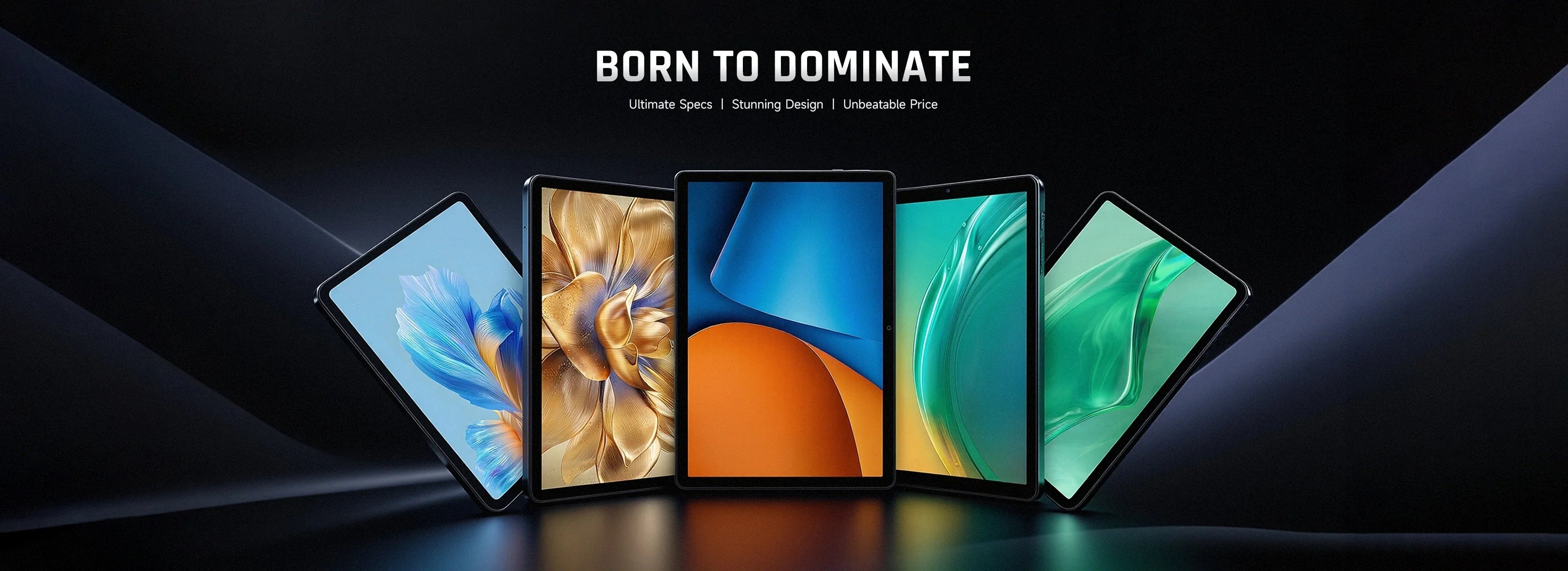


Jakież to będzie wspaniałe doświadczenie, gdy elegancka i klasyczna estetyka zostanie umiejętnie połączona z potężną technologią? Niedawno nowy, modny tablet I10 Plus, wprowadzony na rynek przez BMAX, dał nam idealną odpowiedź!
Ten tablet wyróżnia się smukłą, metalową obudową o prostych krawędziach i spokojną, nastrojową kolorystyką w odcieniu gwiezdnej szarości, która emanuje subtelnym luksusem. Jego grubość wynosi zaledwie 8,6 mm, co zapewnia lekkość i wygodę. Moduł soczewek z tyłu urządzenia nawiązuje do eleganckiego wzornictwa szwajcarskiego zegarka. Dzięki starannemu wykonaniu i doskonałej fakturze, w pełni oddaje arystokratyczną doskonałość i niepowtarzalny smak. Wyposażony jest w 10,1-calowy ekran HD IPS, który doskonale odwzorowuje piękne kolory i zapewnia doskonałą widoczność.
Pod eleganckim wyglądem kryje się potężny rdzeń. I10 Plus napędzany jest ośmiordzeniowym procesorem UNISOC T606. To doskonały procesor, który zawiera dwa duże rdzenie A75 i sześć małych rdzeni A55. Dwa duże rdzenie A75 charakteryzują się znacznie wyższą częstotliwością główną i mocą obliczeniową niż rdzenie małe, co pozwala na sprawniejsze uruchamianie dużych aplikacji, a także zapewnia szybszą reakcję i płynniejsze działanie. Ponadto, duży rdzeń A75 obsługuje technologię Hyper-Threading, która lepiej radzi sobie z obciążeniami, umożliwiając systemowi płynne przetwarzanie wielu aplikacji lub usług jednocześnie, bez wąskich gardeł wydajnościowych i opóźnień. Dzięki temu procesor T606 zapewnia niezrównaną wydajność, niespotykaną w przypadku ośmiordzeniowych procesorów małych, pozwalając Ci cieszyć się radością i szczęściem w każdej chwili.
Procesor graficzny ARM Mali G57, w który wyposażony jest I10 Plus, obsługuje odtwarzanie różnych materiałów wideo w rozdzielczości 4K i umożliwia płynne uruchamianie popularnych gier, takich jak League of Legends, Game for Peace i Peak Speed, dzięki czemu Twój wolny czas stanie się jeszcze bardziej ekscytujący.
Jeśli chodzi o pamięć, I10 Plus wykorzystuje do 12 GB pamięci wbudowanej, w tym 4 GB pamięci fizycznej i 8 GB pamięci wirtualnej. Jego prędkość działania jest znacznie wyższa niż w tabletach wyposażonych w standardowe 4 GB lub 8 GB pamięci. W przypadku wielozadaniowości nie ma obaw o problemy takie jak zawieszanie się systemu czy flashback. Pamięć masowa wynosi 128 GB, co jest wygodne do przechowywania różnych plików. Dodatkowo, aby w pełni zaspokoić rosnące potrzeby w zakresie przechowywania plików, można skorzystać z karty Micro SD o pojemności 1 TB.
Podobnie jak inne nowe produkty, I10 Plus jest wyposażony w nowy system Android 14, który oferuje wszystkie spersonalizowane widżety, tryb podzielonego ekranu z humanizacją i rygorystyczną ochronę prywatności, jakiej potrzebujesz! Tak wydajny system zapewni Ci niezrównaną satysfakcję, intymność i komfort, pozwalając Ci z łatwością cieszyć się zabawą i wspaniałymi doznaniami na wyciągnięcie ręki!
Ponadto, i10 Plus obsługuje dwupasmowe Wi-Fi 2.4G/5G o dużej prędkości oraz Bluetooth 5.0. Wyposażony jest w baterię o dużej pojemności 6000 mAh oraz charakterystyczny dla BMAX system dźwiękowy Magic Sound System, zapewniający wciągające doznania słuchowe dla miłośników muzyki i filmów każdego rodzaju.
Niezależnie od tego, czy chodzi o wygląd, czy osiągi, wyróżnia się na tle innych! To najbardziej intuicyjne odczucie, jakie oferuje nam BMAX I10 Plus! Chcesz doświadczyć mocy tego stylowego tabletu, który łączy w sobie doskonały wygląd, specyfikację, wydajność i opłacalność? Pospiesz się i zabierz go do domu!
Best Mini PCs for Students in 2026: Affordable Computers for School and Online Learning
As students prepare for the new school year in 2026, having a reliable computer is more important than ever. Whether attending online classes, completing homework, researching topics, learning to code, or creating digital projects, students need a device that runs smoothly, is affordable, and remains reliable over the long term.
Traditional desktop computers take up valuable desk space, while high-end laptops may be too expensive for many families. That’s why mini PCs have become an increasingly popular choice among students. With their compact design, efficient performance, and flexible configuration options, mini PCs strike an excellent balance between price, performance, and convenience.
BMAX offers students affordable and reliable computing solutions, including Mini PCs, laptops, and tablets designed for education, productivity, and everyday use.
Why Will Students Need a Good Computer in 2026?
Modern education is closely linked to digital technology. Today, students rely on computers to complete many important tasks, including:
Online Courses and Video ConferencesResearch and Information GatheringMicrosoft Office ApplicationsDigital Learning PlatformsProgramming and Coding PracticePresentations and Creative ProjectsAfter-Class Recreational Activities
Slow or outdated computers can reduce productivity and make daily studies more difficult. A reliable computer for students helps them complete their homework efficiently and develop the important digital skills they’ll need in the future.
What should students consider when buying a computer?
When choosing the right computer for school, there are several important factors to consider, including performance, size, price, and reliability.
Performance for Everyday Learning
A computer for students doesn't necessarily have to be equipped with the most expensive hardware, but it should provide enough performance to handle everyday tasks.
Processor
The processor is the heart of a computer. Modern CPUs allow students to open applications faster, switch seamlessly between tasks, and enjoy a better overall user experience.
Whether for online classes, office work, web browsing, or productivity tasks, a well-balanced processor can deliver the performance students need at a reasonable price.
RAM
Memory determines how many applications can run efficiently at the same time.
For most students:
8GB of RAM is more than enough to handle basic schoolwork, online learning, web browsing, and document editing.
For multitasking, programming, creative work, and extended use, we recommend 16GB of RAM.
Choosing enough memory helps prevent the system from slowing down when students need to have multiple applications open at the same time.Learn more about choosing the right memory configuration in our guide: How Much RAM Do You Need for a Mini PC?
Storage
High-speed SSDs enhance the overall computing experience by offering the following features:
Faster startup speed
Faster app loading speeds
Faster File Transfer
For students, SSD storage helps them complete their daily tasks more efficiently.
A compact design specifically tailored for student study spaces
One of the biggest advantages of mini PCs is their compact size.
Many students study in spaces with limited room, such as:
Bedrooms
Dorm rooms
Small apartments
Shared study areas
Mini PCs not only take up very little desk space, but also deliver the performance needed for modern learning.
Compared to traditional desktop computer cases, mini PCs offer the following advantages:
Smaller size
Lower power consumption
Quiet operation
Cleaner workspace organization
For students looking for a simple and efficient learning environment, a mini PC is an excellent choice.Learn more about the benefits of compact computers in our guide: Mini PC vs Desktop PC: Which One Should You Buy?
Affordable Performance for Students
Budget is an important consideration for students and their families.For students looking for an affordable mini PC, choosing the right balance between performance and price is essential.
Many high-end laptops come with features that students may not need, which drives up the overall cost. Mini PCs, on the other hand, allow users to focus their budget on essential hardware components, such as:
Processor performance
RAM capacity
SSD storage
Connectivity options
This makes mini PCs one of the most affordable options for students—who need reliable performance but don’t want to pay more than necessary.
Should Students Choose a Mini PC or a Laptop: Which One Is Better?
Both mini PCs and laptops are excellent choices for students, but they are suited for different situations.
Feature
Mini PC
Laptop
Price
More affordable
Usually higher
Portability
Limited
Excellent
Desk setup
Excellent
Good
Upgrade options
Better
Limited
Display
Requires monitor
Built-in screen
Long study sessions
Comfortable desktop setup
Convenient anywhere
For students who primarily study at home, in dorms, or at a fixed workstation, a mini-PC is the ideal choice.
For students who frequently move between classrooms, libraries, and other locations, a laptop is a better fit.
Best Uses of Mini PCs for Students
Online Classes and Remote Learning
Online education has become an integral part of modern learning.
A reliable mini-pc can support:
Video conferencing
Online classrooms
Learning websites
Digital assignments
Students can take online courses and communicate smoothly with their teachers.
Homework and Research
Students often need to run multiple applications at the same time:
Web browsers
Documents
Presentations
Spreadsheets
Research materials
A mini PC equipped with ample memory and solid-state drive (SSD) storage can provide a smooth user experience for everyday learning.
Programming and Technology Learning
For students interested in technology, programming, and computer science, a high-performance computer is essential.
Mini PCs offer an affordable learning environment:
Coding
Web development
Software tools
Computer science projects
Entertainment After School
After completing their schoolwork, students can also use their computers for personal activities.
Students can use the mini-pc for the following activities:
Watching videos
Streaming content
Listening to music
Casual gaming
A multifunctional computer can meet both educational and entertainment needs.
Best BMAX Computers for Students in 2026
BMAX B1 Plus Mini PC—An Affordable Computer for Students
For students who need a reliable computer to meet their daily learning needs, the BMAX B1 Plus mini PC is an excellent choice.
It’s ideal for:
Online classes
Web browsing
Office applications
Homework
Basic productivity tasks
Its compact design makes it a perfect fit for bedrooms, dorm rooms, and study areas.
BMAX B6 Plus Mini PC—A Powerful Choice for College Students
For students who need stronger multitasking performance, the BMAX B6 Plus mini PC offers a superior computing experience.
It is suitable for:
University coursework
Multiple applications
Programming learning
Productivity tasks
The B6 Plus strikes a good balance between performance, size, and value.
BMAX B11 Pro Mini PC — High Performance Student Computer
The BMAX B11 Pro Mini PC is designed for students who need stronger performance for advanced learning, productivity, and multitasking.
The BMAX B11 Pro Mini PC is suitable for:
University coursework
Programming
Creative applications
Multitasking
Office productivity
Its compact design makes it suitable for home study spaces, dorm rooms, and professional workstations.
Why Choose BMAX Student Computers?
BMAX is committed to creating affordable and reliable digital products, including Mini PCs, laptops, and tablets designed for students, professionals, and everyday users.
For students with different learning needs, BMAX provides flexible computing solutions:
Mini PCs: Ideal for students who need powerful performance, a clean desktop setup, and excellent value for home study, dorm rooms, and workspaces.
Laptops: A great choice for students who need portable computing solutions for classrooms, libraries, and learning on the go.
Tablets: Suitable for mobile learning, reading, note-taking, online courses, and everyday entertainment.
Whether students need a compact desktop computer for intensive study or a portable device for flexible learning, BMAX offers reliable solutions for different educational scenarios.
Affordable Performance
The BMAX series is designed to deliver practical computing performance at a highly competitive price, helping students access reliable computing technology at an affordable price.
Reliable Quality
Every BMAX device undergoes rigorous quality control testing before shipment to ensure stable and reliable performance.
Designed for Everyday Users
Whether for students, families, professionals, or home users, BMAX’s products are designed to meet real-world computing needs.
Back to School 2026 Special Offer
A reliable computer is an important investment for every student on their educational journey.
To kick off the 2026 back-to-school season, BMAX is launching a special promotion on select computers to help students purchase trustworthy tech products at more affordable prices.
Whether you need a computer for online classes, completing assignments, programming, or boosting your daily productivity, BMAX offers affordable solutions designed specifically for modern learning.
Start the new school year with a smarter computer.
Choose BMAX for affordable and reliable student computers.
Frequently Asked Questions
Is a Mini PC good for students?
Yes. Mini PCs are an excellent choice for students to take online classes, complete assignments, conduct research, program, and handle everyday office tasks. Not only are they powerful, but they also save desk space.
How much RAM does a student computer need?
For basic schoolwork, 8GB of RAM is usually sufficient. If you need to multitask, program, or use the computer for extended periods, we recommend choosing 16GB of RAM.
Can a Mini PC replace a desktop computer for students?
Yes. Modern mini-pc are not only capable of handling most students’ academic tasks, but they also take up less space and consume less energy than traditional desktop computers.
Is a laptop or Mini PC better for students?
It depends on the student's needs. Laptops are more portable, while mini PCs offer better value for money and provide a more comfortable desktop experience.
What is the best mini PC for students in 2026?
For students, the best mini PC depends on their specific needs. Entry-level models like the BMAX B1 Plus are suitable for basic learning, while more powerful models like the BMAX B6 Plus and B11 Pro are better suited for multitasking, programming, and advanced office applications.
In 2026, the personal computer industry stands at a peculiar crossroads: the overall market is contracting, yet structural opportunities are exploding.
Recent research reports from authoritative institutions predict that global PC shipments will fall from 297 million units in 2025 to 255 million in 2026—a 14% year-over-year decline. This adjustment is expected to persist through 2027, with true stabilization not occurring until 2028. Rising costs for memory and CPUs, combined with the fading "refresh cycle" boost triggered by the end of Windows 10 support, are collectively suppressing total industry volume.
Yet, the same reports express great optimism in other areas: global AI PC shipments are projected to rise to 150 million units in 2026—up 39% year-over-year—with their share of the total PC market surging to 59%. By 2028, AI PC penetration is expected to climb further to 82%, accounting for 84% of total revenue. IDC statistics corroborate this trajectory, showing 114 million AI PC shipments (43% penetration) in 2025, with the figure projected to surpass 55% in 2026.
This represents the most profound "divergence between volume and price" in the PC industry's forty-year history: while shipment volumes are shrinking, revenue is projected to dip by only 5% in 2026, and the average selling price is set to rise from $933 to $1,025. The AI PC is not merely a product line upgrade; it is rewriting the industry's growth formula—shifting the focus from "selling more units" to "delivering smarter devices at higher price points."
The PC's "Midlife Crisis" and the Rapid Iteration of AI Technology
Traditional PCs have evolved over four decades, yet their core form and logic have remained unchanged: screen, keyboard, and mouse; launching software and saving files. They have always been machines that simply "wait for instructions."
The paradox of the past two years lies here: while Large Language Models (LLMs) have demonstrated the ability to understand intent and generate content, these capabilities have largely remained confined to cloud servers, out of reach of the files, emails, and workflows that users handle daily. You can ask a large model a question, but it cannot help you transcribe last week's meeting recording into minutes, compare project schedules, or send reminder emails to colleagues—because it cannot access your local data or operate your software.
There is only one way to resolve this contradiction: embedding AI directly into the computer. This requires a systematic overhaul of chip architecture, operating systems, and software ecosystems, rather than simply adding an "AI button."
In recent years, chip giants like Intel, AMD, and MediaTek have crowded into the AI race, entering the core processor market for AI PCs and unveiling their respective on-device AI solutions almost simultaneously. This is no coincidence; it reflects an industry consensus: the AI PC represents the only growth avenue in a sluggish PC market.
A Threefold Transformation: What the AI PC Rewrites
Hardware Architecture: From "Division of Labor" to "Integration"
Traditional PC chips rely on a division of labor—the CPU handles general computing while the GPU manages graphics, with data constantly moving between them. However, AI models require simultaneous processing of massive amounts of data, making this data transfer a bottleneck.
AI PC chips are moving toward integration: the CPU, GPU, and AI-specific computing modules (NPUs) are combined and share high-capacity memory, allowing AI models to reside permanently within the system. In other words, it gives the computer a "local brain."
Interaction: From "Manual Execution" to "Verbal Instructio
If AI can interpret the screen, understand speech, and grasp context, human-computer interaction shifts away from "clicking here" or "dragging there." Users simply need to tell the computer, "Extract the key points from this report, create a three-page PowerPoint presentation, and use that template from last time." The computer then handles the file retrieval, software launching, formatting, and generation. In this way, AI becomes a ubiquitous, system-level service.
Software Ecosystem: From "Standalone Software" to "Cross-Application Agents"
This is the most critical variable. Currently, using a computer essentially means using standalone applications—Word is Word, and Excel is Excel. The logic of the AI PC, however, is cross-application; an AI assistant needs to access documents, spreadsheets, emails, and calendars simultaneously to complete a comprehensive task. This shift is transforming how we define various aspects of the digital landscape: the PC is evolving from a mere tool into an employee's "digital workstation," while local computing centers are becoming a new line of defense for enterprise data security. "Cloud-edge synergy with an edge-first approach" is emerging as the new trend. In other words, cloud-based public large models are invoked only for processing general information flows, whereas scenarios requiring low latency, localization, or offline operation are handled by local PCs and workstations.
The Path of Transformation in the "Year of AI Agents"
The industry widely regards 2026 as the "Year One" of practical AI implementation—often referred to as the "Year of AI Agents." From an industrial perspective, the PC sector is undergoing a paradigm shift:
• Shift in growth logic: Moving from "selling more devices" to "increasing the value of each device."
• Shift in competitive logic: Moving from "price wars" to a dual-driver strategy of "high-end AI flagships" and "scenario-specific hit products."
• The shift in value chain logic: from "low-profit, high-volume sales like selling bottled water" to "value-added competition like specialty coffee".
• Shift in geopolitical and supply chain logic: The restructuring of AI PC hardware is leading to a rediscovery of the value within China's supply chain. Domestic chipmakers are achieving breakthroughs in key technologies, while upstream and downstream sectors—including system assembly, PCBs, storage, and thermal management—are benefiting simultaneously. The domestic supply chain faces a dual opportunity: import substitution and rapid market expansion.
The PC is facing a "midlife crisis," yet this very challenge offers an opportunity for renewed growth. Over the next three years, the keyword for the PC industry will not be "recovery," but "reconstruction"—reconstructing hardware architecture, interaction methods, software ecosystems, and the competitive landscape. Manufacturers capable of transforming AI from a mere "feature" into a core "product architecture" will win the future; conversely, players who simply slap an "AI" label on traditional PCs will eventually be swallowed by the wave of "shrinking volumes but rising prices."
For the first time in the PC industry's forty-year history, the protagonist of the story is neither a "faster CPU" nor a "lighter chassis," but rather "AI living inside the computer." This story is only just beginning.
As an innovative brand specializing in personalized digital products, BMAX adopted a forward-looking strategy early on to establish a comprehensive presence across sectors such as mini PCs, laptops, and tablets. Its recently launched AI PCs have won the favor of consumers in numerous countries and regions, thanks to their exceptional design, specifications, performance, and value for money. Most importantly, every product undergoes 300 rigorous quality control checks before leaving the factory and comes with a one-year warranty, ensuring reliable quality. When choosing an AI PC, choose BMAX!
Minikomputery stały się jedną z najszybciej rozwijających się opcji w nowoczesnej informatyce. W porównaniu z tradycyjnymi komputerami stacjonarnymi zajmują mniej miejsca, zużywają mniej energii, są łatwe w transporcie i oferują wydajność wystarczającą do codziennych zadań, takich jak praca i nauka. Jednak przy tak wielu dostępnych opcjach, wybór odpowiedniego mini komputera może okazać się nieco trudny. Czy wybrać Intel czy AMD? Ile pamięci RAM potrzebujesz? Czy wydajność mini PC wystarczy do pracy, nauki lub rozrywki? Ten poradnik zakupowy pomoże Ci zrozumieć najważniejsze czynniki, które należy wziąć pod uwagę przy zakupie minikomputera w 2026 roku. 1. Rozważ swoje główne przypadki użycia Wybór najlepszego dla Ciebie mini komputera zależy od Twoich konkretnych potrzeb. Praca zdalna i produktywność Do pracy zdalnej, zadań biznesowych i codziennych potrzeb związanych z produktywnością mini komputer powinien oferować następujące funkcje: Wydajność wielozadaniowości Szybka pamięć masowa SSD Niezawodna łączność sieciowa Obsługa konfiguracji wielomonitorowych Ruchliwość Do wykonywania zadań takich jak korzystanie z pakietu Microsoft Office, wideokonferencje, przeglądanie stron internetowych i zarządzanie dokumentami nie jest wymagany duży komputer stacjonarny. Kompaktowy mini PC może spełnić wszystkie te potrzeby, oszczędzając jednocześnie cenne miejsce na biurku. Studenci i zastosowania edukacyjne Uczniowie zazwyczaj potrzebują komputera do: Kursy online Badania Zadania pisemne Ćwiczenia programistyczne Nauka multimedialna Mini PC jest praktycznym wyborem, ponieważ oferuje łatwość obsługi na poziomie komputera stacjonarnego, a jednocześnie nie zajmuje zbyt wiele miejsca. Rozrywka i multimedia domowe Wielu użytkowników wykorzystuje mini komputery również jako urządzenia do domowej rozrywki. Dzięki portom HDMI i kompaktowej konstrukcji mini komputery można łatwo podłączać do monitorów, telewizorów i innych urządzeń peryferyjnych, co umożliwia: Oglądanie filmów online Przeglądanie sieci Odtwarzanie muzyki Zarządzanie treścią cyfrową 2. Wybór odpowiedniego procesora Procesor jest jednym z najważniejszych podzespołów komputera. Do wykonywania podstawowych zadań do codziennych zadań wystarczający jest procesor klasy podstawowej. Dla użytkowników wymagających wyższej wydajności, na przykład tych zajmujących się: Intensywne wykonywanie wielu zadań jednocześnie Aplikacje programistyczne Aplikacje kreatywne Produkcja graficzna Obciążenia biznesowe Mały komputer wyposażony w mocniejszy procesor zapewni płynniejszą pracę użytkownika. Nowoczesne procesory AMD Ryzen i Intel Core zapewniają wyjątkową wydajność przy jednoczesnym zachowaniu energooszczędności. 3. Ile pamięci RAM potrzebujesz? Ilość pamięci RAM decyduje o tym, ile aplikacji może płynnie działać jednocześnie. Zalecana pamięć RAM: 8 GB pamięci RAM: podstawowe przeglądanie stron internetowych i proste zadania16 GB pamięci RAM: zalecane dla większości użytkowników32 GB pamięci RAM lub więcej: obciążenia na poziomie profesjonalnym i zaawansowana wielozadaniowość Dla większości użytkowników domowych i pracowników biurowych 16 GB pamięci RAM stanowi idealne połączenie wydajności i ceny i jest więcej niż wystarczające. 4.Przechowywanie ma większe znaczenie Tradycyjne dyski twarde są zastępowane dyskami półprzewodnikowymi (SSD), ponieważ dyski SSD oferują następujące zalety: Krótszy czas rozruchuKrótszy czas ładowania aplikacjiLepsza ogólna responsywność Wybierając mini PC, weź pod uwagę: Pojemność pamięci masowej Typ dysku SSD Opcje aktualizacji Dla użytkowników, którzy potrzebują dużej ilości miejsca do przechowywania aplikacji, plików i treści multimedialnych, dobrym wyborem będzie dysk SSD o pojemności 512 GB — oferuje on wystarczającą pojemność w przystępnej cenie. 5. Łączność i porty rozszerzeń Dobry mini komputer powinien być wyposażony w wystarczającą liczbę portów, by sprostać codziennym potrzebom. Ważne porty obejmują: HDMI lub DisplayPort Porty USB Porty USB-C Ethernet Wi-Fi Bluetooth Dla produktywnych użytkowników biurowych, którzy potrzebują większej przestrzeni roboczej, bardzo przydatna okazuje się także obsługa wielu monitorów. 6. Mini PC kontra tradycyjne komputery stacjonarne Tradycyjne komputery stacjonarne nadal mają przewagę, jeśli chodzi o zaawansowane gry i zadania wymagające profesjonalnej obsługi. Jednakże mini komputery PC oferują następujące zalety: Mini PC Tradycyjny komputer stacjonarny Mniejszy rozmiar Większy ślad Niższe zużycie energii Wyższe zużycie energii Łatwe umieszczenie Wymaga więcej miejsca Cicha praca Więcej komponentów Dobra codzienna wydajność Większa elastyczność aktualizacji Dla większości przeciętnych użytkowników mini PC stanowią wydajne, praktyczne i wygodne rozwiązanie. Dlaczego warto wybrać BMAX Mini PC? Celem firmy BMAX jest tworzenie kompaktowych komputerów łączących w sobie wydajność, design i wartość. Niezależnie od tego, czy potrzebujesz komputera do: Praca z domu Nauka online Aplikacje biznesowe Rozrywka Codzienne zadania Mini komputery BMAX zapewniają niezawodne rozwiązanie komputerowe bez zbędnych kosztów. Wniosek Wybór mini PC nie oznacza rezygnacji z wydajności. Mini PC może stanowić dobrą alternatywę dla większości użytkowników, o ile jest wyposażony w odpowiedni procesor, pamięć, dysk i łączność. Przed dokonaniem zakupu dokładnie przemyśl swoje codzienne potrzeby i wybierz mini PC o konfiguracji i poziomie wydajności odpowiadającym Twojemu stylowi życia i nawykom pracy.